Boundless Optimism
A Guide to the Fulfilled Life
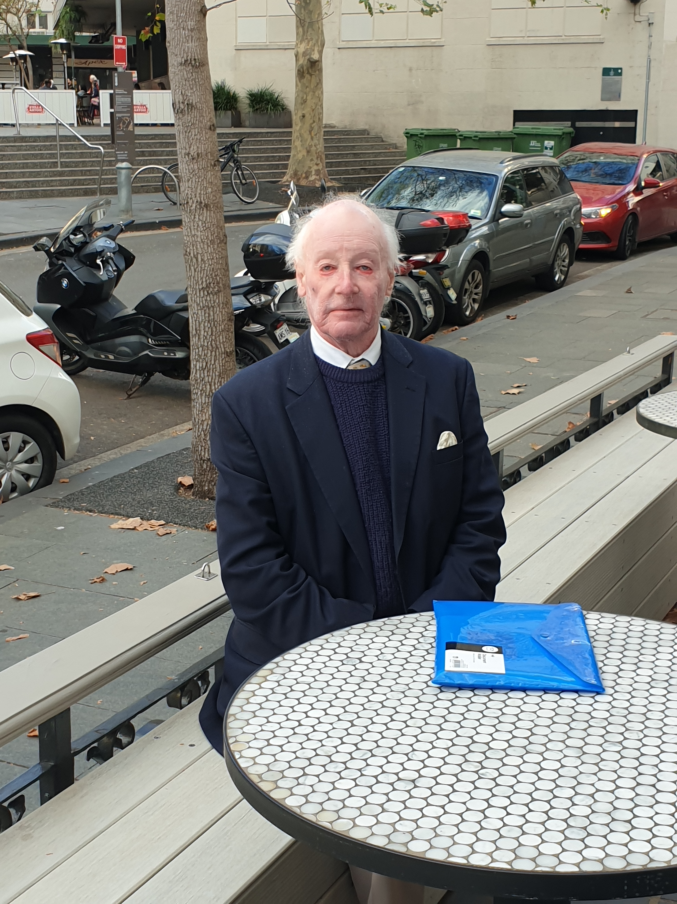
Boundless Optimism
A Guide to the Fulfilled Life
Boundless Optimism
A Guide to the Fulfilled Life
Maxwell Dodd
A GIFT OF ENCOURAGEMENT
Spooner Dodd Consulting Services
Post Office Box 462
EDGECLIFF NEW SOUTH WALES 2027
A U S T R A L I A
maxwelldodd2021@gmail.com
Telephone (+61) (0) 410 940 183
(c) 2015, renewed 2021
As we begin...
Boundless Optimism reflects an attitude to life of an unbridled expectation of the constructive and enlarging. It turns on a view of existence that is unquenchable in its sense of the possible and its willingness to advance a vision of life that sees victory as axiomatic and the obstacles to be met on the way merely as challenges to be overcome.
It began as a series of letters sent in late 2013 by an older Australian to an American student in answer to questions of more efficient living. The lad in California had met his guide in Germany where the older man was conducting programmes of meditation for executives and professional people in a small hotel beside the Rhine in the Rhine Gorge, 37 km. south of Koblenz. He had come to the hotel as a guest who was a cyclist and traveller (the German riverbanks are a cycling paradise) and had left as a seeker of greater wisdom. These letters are the outcome of their contacts over the next few months. The correspondence came to be read by the lad's father who as a schoolmaster appreciated not only their underlying good sense but their application of an old-fashioned grammar and syntax.
What follows is an editing of those letters (they were written with the loose thought that at some stage my publishers would find them of interest) in order to make their wisdom easier to digest by younger searchers around the world. They represent not an old-fashioned view of life but an attempt to present in as few words as possible a universal truth that can be taken into life by those of late teens and twenties. They will assist in the world of late secondary and tertiary studies but their wider guidance is of life-long proportions and extends far beyond education and career, important as they are, and will benefit anyone seeking a new beginning at any age.
In essence, what is presented is something that has been the subject of endless writing in innumerable cultures of the complete life. The message of the dignity and worth of the individual, his (or her) uniqueness and the scope of all that lies within that individual though probably undiscovered and, worse, undiscoverable, is beyond culture and locations of time and place. That said, the lessons that are offered if properly taken into the life of an individual can lead to success (however defined – it is far far more than an accumulation of material possessions) on scales that are truly cosmic. What will be repeated ad nauseam will be the use of the singular and the immensity of all that lies within that singular individual awaiting discovery and abundant development.
Read on and be mightily blessed but remember that the guidance is offered to you alone and in your own terms. Nothing that is contained here can be done for you – you alone learn but you alone bear the rewards of that instruction. Go forward and be the man or woman of your dreams – and have a lifetime of laughter and joy in all that you discover.
Sydney, New South Wales, Australia
Thursday 5 February 2015
The Start of it All
I smile at the extraordinary accident of time and place that brought us together. I see this in terms that are Calvinist – we were meant to meet – the young man from rural America and the retired lawyer turned “coach,” Australian born, but now more and more a European. But from that time can come blessings to both of us by which both our lives will be enlarged – and, through us, the lives of others. Winning all round, one might say.
Life is a wonderful exciting experience that calls us to grow and expand and to seek more of it and of ourselves, daily. It is never possible for us as humans to retire from the scene of daily life (what I call “the battlefield of life”) and we should never seek to do so. We are challenged to go out daily into the world and be expanders – to build ourselves and to be the most active participants in the development of the world around us. Many there will be who try to stop the process and who will seek to deny the reality of constant change and flow but even they, however briefly they may succeed, will find that their efforts were wasted. Life moves around us and we shall grow in that fluidity. We must celebrate that activity and our role in it or we can become the failures whose lack of success will speak for itself.
This is not to see those who create large business enterprises as the only ones who have succeeded in life. Material success is one of the many manifestations of success and, perhaps, one of its most obvious. Success however has endless definitions and the material and career are but one form of it. Certainly if the choice be between labour and career, the choice has to be career, labour with a wider purview. We are called to work and to find expressions for our talents and capacities and our energies. That some individual has a gift for participating in some sporting activity with brilliance clearly means that a meaningful life for that person will perhaps involve exploring what that talent can mean. That one is musically or artistically blessed, will mean, equally, the exploration of that gift.
Whatever we are and whatever we find to be our particular strengths and qualities, it is those strengths that clearly we are the most likely to offer to life as our contribution to the forward movement of the nation and the planet Earth that we inhabit. That can be something as simple as unusual physical attributes or good looks. The majesty of the individual is that each one of us is so delightfully complex a universe of our own – so rich and so unique – and I use that word in full knowledge of its precise meaning. There are no carbon copies however much we may wish to pattern ourselves on the lives of others. Each of us is a king or a queen or a president – each is the monarch of our own destiny and the journey to it – no-one else finally has the responsibility or the duty to explore it.
I am reminded of the words of the British journalist and poet William Ernest Henley and his famous aphorism from Invictus (1875) -
I am the master of my fate,
I am the captain of my soul.
That rather says it all.
Self-confidence is King
The great common quality of the winners in life is that he or she (you will find that I use the masculine androgynously) – the essence of the view that one should be embarrassed by such a use is itself indicative of a lack of confidence in oneself – believes in himself or herself. He is comfortable that he has all that is required to deal with the circumstances of life whatever they may be. He can cope with all examinations, interviews, meetings, social encounters, sporting events and challenges of the mind and the emotions at all times effectively and efficiently and with satisfying results. He is unafraid of defeat or of loss and welcomes hazard and risk as the price to be paid for victory and reward. He rises from his bed early in the morning with a clear vision of his day and with a robust expectation that the needs of the day will be more than met and that within him lies an essential adequacy of mind and body (and of soul) that nothing can diminish. This one paragraph sums up all that follows in this collection of insights.
Self-belief is the simple recognition of one's own capacities and qualities and of their sufficiency. The individual stands alone and is possessed of an understanding of his own worth and merit that cannot be shaken. He is guided by his own inner compass and will not be put off by his fears or the expressed negative expectations of others. The winner is the man or the woman whose self-acceptance is complete and whose standards of judgement are of his own choosing. Winning is for all, but few there are who find the simple principles of its attainment.
Important as it is to have your own rich understanding of all that you are (only you can determine who you are and only you can celebrate the discoveries of what you will find there), it is imperative that you deal with the world in your own terms. Others will want to influence you and guide you (I am seeking to do just that in what I am saying in this letter) but the choice is forever yours as to what you accept or reject – you alone decide – that is the first ingredient of a confident self-assessment. Never be put off by the negative or destructive comments of others or their desire to reduce or to frighten. Yours is the way to be yourself – without apology or fear of embarrassment.
Winning is what we all want. We go to sporting events and choose to support a team or a player. He (or she, or they) are our team or side – we shout loudly for their victory and are so pleased when it happens and at times so devastated when it does not. We see all manner of competitions and challenges and commercial activities that are dealt with successfully or without the desired result. We see all around us relative positions of victory or loss and we seek to identify ourselves with those who win. What matters is that the outcome is the victory that you see it to be – again in your terms and without the colouring of the opinions of others. “You” are the whole purpose of all that is set out in this small collection and your dealing positively and with reward with all that comes to you is the stuff of all that is here. Nothing else matters – the guidance that has come from parents and teachers and a whole string of outside influences means nothing unless it has been weighed and accepted or rejected by you in your own terms.
In short, the choices that the confident make are choices made wholly in recognition of the dignity and worth of the individually self-assured. Yours remains a right of selection whatever others may say or think.
Winners look like winners
The self-confident present themselves to the outside world as the successes they are becoming (the process is life-long and gently incremental). They have the posture and the carriage of an easy authority over themselves and the world around them that says to that world “I have much to offer.” They stand tall, they look tall, they think tall, they are tall – whatever their height. They have discovered that extraordinary ingredient of latent authority – that you are weighed and not found wanting when you look like a winner. You are aware of how often I speak of the impact on my life of a certain smooth haired fox terrier of impeccable pedigree of the long ago – her carriage was Self-Assurance Plus – her head was erect and her tail like a mast at the stern of a ship.
The winner walks into a room or a building or a courtroom and exudes an easy positive self-authority that is tangible to those around him. He is not arrogant – merely self-assured and comfortable with himself. He knows that he has something to say and that his time will come to say it and to say it well. He is undaunted by the grandeur of his surroundings - the way someone else has devised an environment of authority for himself which is intended to impress and perhaps to alarm. He is certain of his capacity to cope and be seen and be heard. He is the equal of his inquisitor or the person to be met – at all levels and with the native authority of his own deep inner comfort. Nothing will defeat him.
Externally his inner certainties of strength and courage and easy self-acceptance will reflect themselves by what he is wearing and his whole demeanour will be one of power and clarity. He will be well-dressed in clothes that are well-fitting and neat and usually well co-ordinated. We speak today of a ghastly vulgarity called “power dressing” but the idea of looking authoritative is undeniable. The confident look it – however much they may have to struggle to afford the appearance. In short, winners look like winners.
Winners and the self-confident are self-evidently in command not merely of themselves inwardly but also of their environment outwardly. Nothing will daunt them and nothing will reduce or restrict. They are comfortable within themselves and are there to achieve a result that will be of wider application. They give off a sense to the outside world of clear inner authority which nothing can reduce and which will make it easier to accomplish their aims.
Victory is simple – and likely to be axiomatic.
Our Freedom is Precious
The pressures upon us to be “normal” and to conform are immense. We are socialised animals and every effort is made from parents and schools to governments and employers to have us behave in predictable ways where our choices are pre-determined. The complete life is the one that far from denying these pressures asks of each one whether it is guidance worthy of acceptance.
When you drive a motor vehicle, you participate in a very developed social experience though being told this is rarely part of what is nowadays called “driver training.” You are taught the procedures for the management of the vehicle – and a whole range of matters of mechanical significance in the operations of the vehicle and then one is brought into contact with the road rules however defined. One learns of priorities and rights of way and all manner of complexities but rarely is the point made that driving necessitates a social perception of the other at all times – we have turn indicators on cars so that we can display our intentions to our neighbours in the traffic. That so often we do not tells us something of the selfishness of our day and of our failures to see wider understanding. Driving is indeed a very good illustration of the links that bind us as individuals with each other.
The legal system has been developed on the basis of ensuring good social order with parliaments, legislatures and congresses (the nomenclature does not impinge upon reality) with the power to create and destroy or merely to diminish the structures of the world around us. We are expected to give almost immediate obedience to what has come from “higher” authority though its aim may be our enslavement and not our growth. We need order – but we also need to be sure that the structure that is imposed upon us (or, more precisely, wishes to be imposed upon us) has our consent. I am very wary of a whole range of modern “occupational health and safety” regulations which seem to be the inventions not of a benign authority but of one seeking dominance over us in the name of a wider social obedience that stifles creativity and empowers the social engineers.
In short, the answer lies not in the denial of authority but in our ever-watchful surveillance of what is pushed at us. We remain independent and our capacity to make the choices of a free life untouched. We must ensure that for all the efforts of those who may be well-meaning (and whose apparent goodness may have an unpleasant undercurrent of bossiness) to provide ever more complicated systems of our governance, we remain as free as possible. We must be questioning tirelessly of the efforts of the apparently well-intentioned lest we become enslaved. Our democratic traditions require great watchfulness on our part.
Our freedom relies on little else and our capacity to enjoy that freedom turns on our scrupulous enquiry of and doubt about all pressures to reduce it and to recognise the responsibilities that accompany it. Liberty must never become licence.
Make Your Mind Up
Something that came to me this morning in the internet was an article from The Sydney Morning Herald of a few days ago in its finance section. There are occasionally articles published there of interviews with prominent businessmen and entrepreneurs. This piece had to do with a successful self-made man from Melbourne who in answer to the question of what he saw as his greatest commercial virtue said simply “decisiveness.”
This rang every bell with me. I have been watching in recent months the efforts of a lad to whom I am “guide, philosopher and friend” to present to larger Australian enterprises in the corporate world programmes of management training. I am not entirely sure that business is quite so complex that it deserves all the attention being given to it in the academy and am even less certain that Federal Government programmes of investing in such training are justified. That said, I am a voice crying in the wilderness and there is, as you are well aware, a vast industry relating to business education.
The programmes that the lad is seeking to have business take up are from what I have read of them well-crafted and appropriate to the needs of those who are salary earners at middle level in the corporate hierarchy. What has startled me however is that the people whose duty it is to assess these programmes and then to see them properly implemented by the businesses that employ them seem so irresolute and indecisive. I am constantly being told of changed criteria for acceptance and of the unwillingness of the middle managers charged with the responsibility of a decision to make one. Deferment of decisions and handing them on to others seem standard practices. That those who would be seeking to supervise the delivery of the programmes themselves seem so badly to need their guidance disturbs me as much as it frustrated my friend. These are people earning substantial sums as annual salaries whose functions should be to lubricate the internal wheels of corporate communications and who seem by their conduct to deny such logic. It is infuriating (and justifiably so) to those seeking to present programmes and earn incomes from such activities. It reflects so badly on the quality of thought and integrity of so many.
I am aware that what I have just said relates to the wonders of large impersonal corporations and not to the smaller business enterprises with either few employees or none. I recall my own days as a principal in a firm of solicitors where my own duties of performing professionally were only infrequently hampered by my having to see the practice as a business. When in late 1976 I was offered (via a friend at the Bar) an opportunity to expand the practice with a new client whose annual contribution to the firm's revenue would be larger than the whole of the practice's income as it then stood, I made an immediate decision in favour of the proposition. Getting it all up and running in 1977 kept me very busy (I had to move house in order to be nearer the new second office) but within a year it had all settled into a flowing order that made the economic rewards and the wider contacts substantial. Opening a third office based on the activities of the first two then became necessary and of course it was all in the end managed with ease.
In short, decisiveness in all things however complex is a virtue and something to be lived with. There are problems that will flow from making new moves from which there may be little or no protection. New ventures, however, and I see the term to have a much wider significance than merely a commercial one, are the stuff of challenging rich lives. Never complain of being bored – it cannot happen.
I Celebrate Myself
I have taken such delight in all our conversations about life and the celebration of its riches. There is a line from the American poet, Walt Whitman (1819-1892), where he says “I celebrate myself.” I think this comes from Leaves of Grass – I recall seeing its manuscript in the Library in 42nd Street in New York some years ago. It is in this work that he uses the astonishing term “the body electric.”
This points to the sense of the worth that is in each one of us. We are all remarkable creations, each with his own universe of independent quality and character – each alone and beyond all copying. We are individual manifestations of life at its most personal and idiosyncratic – make as much as you can of the distinctions – they are the thing that makes you “you.”
Never be put down for being “different” or “eccentric.” I am aware that the world around us would put us into boxes and keep us well behaved and obedient. For all that, the man or woman whose life is colourful and complete and carefree is singularly aware of his or her independence of thought and action. The delicious word “naughty” comes to mind. This is the stuff of a valuable life and one that makes the world turn. Emerson as usual put his finger on it by observing that the world was moved not by the reasonable man, but by the unreasonable one. Grey conventional behaviour has never created anything more than more greyness. Be free and, if you wish, “disobedient” - question anything and everything. It always alarmed my late Mother that I was so unwilling to take anything as “given” until I had confirmed it for myself. To her, my willingness to ask questions and to “delve” (her word for it) was troublesome and trouble-making. Now that she is gone to her rest and I am myself well into my 70s, I appreciate again that what alarmed her was something that I now see more clearly than ever to be precious.
Question, be independent and be utterly proud of what you find. There is only one “you” and there will never be another one and be sure that the one that is here now is capable of being and doing anything he wishes.
Go forward as only you can.
Courage and commitment are all
I see so many projects started which when the first hurdle is met are quietly shelved. The first hurdle is the test of commitment and it is usually easy to mount. Failure can come – that is undeniable – but the best way to deal with the collapse of an endeavour and to see it in its correct colours comes from Henry Ford who said “Failure is the opportunity to start again.”
Courage is mandatory and just as much an ingredient in the success we aim to have. We are constantly faced by the choices of going forward or avoiding a problem. Usually the problem is a good deal less of an obstruction than we first thought and in meeting it head on we found ourselves invigorated and strengthened for later and often much larger challenges. The one who will buckle at the first sign of a hindrance is not the builder in life of whom (and to whom) I am writing. That is painful to say but it recognises the realities of life. We face the daily choice of risk and hazard and of an uncertain consequence. The world seems to be desperate for certainty when all growth and discovery come of lack of clarity. Uncertainty and its proper management are the true tests of the leader and the man of nobility of soul. We are not always given a straightforward roadmap and the way ahead may be possessed of all manner of difficulties some of which may be well outside our earlier contemplation but that is no reason to buckle under the burdens of chance. We must go forward.
I am a serious long distance cyclist and have been for a lifetime. I rarely use a map. I am happy to know that my destination is in one direction or another and the sun is a very good guide to the general aim of my travelling. That can lead to being lost (all long distance cyclists will smile at what I am saying) but the adventures of being “geographically misplaced” are usually interesting in themselves and the locations visited often charming.
We must rise from our beds each morning restored by a night of deep sleep with a clear view of the day's activities. We must see each day as an opportunity of growth which fits the larger pattern of all that is for each one of us expanding of our experience. We never know exactly what is going to happen and if we have the simple valour to see that growth as an opportunity we can lead endlessly fulfilling lives. And those lives are of benefit not merely to us but also and equally importantly for others.
Seize the new – daily. Opportunities of excitement and growth and the wonders of enlarged human contact abound. With all of that come the qualities which make the experience of living truly Life.
Man is a spiritual creature
I see that extra dimension of man to be the essence of each one of us and our failures properly to explore it our greatest loss. I am singularly aware that in the times in which we live religion (the word we apply to the pursuit of our inner being – itself a tragedy – we do not need the codification of systems and their thrall) is seen to be of another age and to have failed. The religious experience offered by Christianity which has now for 2,000 years shaped the West and inspired all the creativity that has given us democracy and the rule of law and our technical and scientific advances as well as our social progress is now in decline. I regret that deeply though as a student of liberal Protestant theology I see the refusal of people in the new century to explore their spiritual dimension with the aid of religious practice to be something both to be accepted and to be perhaps even welcomed. The rejection of so much is a good excuse to give it constructive renewal.
That said, I am sure that the fulfilment of all that men and women can become is in the last analysis spiritual. I am aware too that in the construct known to the world of psychology as “Maslow's Hierarchy of Needs” the final stage of growth is called “self-transcendence” - meeting human wholeness and total well-being was in the view of the architect of the schema a spiritual thing – and linked to and yet beyond the creative and fully emotionally developed. I am sure that in the simplicities of Eastern meditation practice (itself to be as rigorously sought in terms of time as it is to be pursued with elasticity of approach – I am not sure that the asana position is critical to developed inner travelling) will be found that long-term and yet very gently incremental journey inwards Ito completeness and deeper satisfactions. The Buddha made much of the need too of the recognition of the “other” - in self-surrendering and ego-denying compassion. Christianity saw the similar obligation to be as much at one with one's neighbour as with oneself and to deal with him or her accordingly. The exploration of the spiritual is not necessarily the outcome of vast theological study but of something astonishingly hard-nosed (and practical and consistent). And yet it is the source of deeper personal enrichment and the well-being to go with it.
We are called to live well and to pursue lives of inordinate riches of all that makes for happiness and completeness. I see that those who study happiness as a professional field (I am mildly sceptical of this, let me add) draw a distinction between “ecstasy” and “contentment.” Ecstasy is seen as a higher level of personal satisfaction to which the term “peak experience” could be applied. “Contentment” is seen as something less volatile and, perhaps, as I judged the literature, secondary. I saw this to be a sadness as again the lesson has to be of deeper satisfactions not necessarily outwardly manifesting themselves.
Religion can be a form of bondage and a system of regulation that many find comforting – their thinking has been done for them. What I am discussing here however is the active pursuit of the Greater in life (however defined) with little or no belief system and in the highest freedom. Search the spirit and be deeply blessed and find in yourself and in life at large a Presence of the Transcendent to which language can put no definition. What you will find however is a comfort and wholeness that the storms of life cannot touch and with that freedom from reaction, peace of soul and of mind and of emotions without peer.
Remember that we are dealing with absolutely indomitable living and its easy attainment. Such blessings are to be had however only by relying on what one American spiritual motivator calls “the Higher Power.” That Higher Power, the power of God to solve and re-order and complete, is the stuff on which we must build. It is so easily available and so willing to be involved in our lives and to offer Itself to us. It is a simple matter of developing an active consciousness of that Presence and having the insight and insights indeed to see its dynamic participation in our lives.
We are to be the victors and never to be conquered or reduced – however down we may be at the start of the upward journey. God is the simple solution and the great Ally. Call upon Him and find that the promises set out in the 40th chapter of the Book of Isaiah of “soaring with wings as eagles” are not pretty words but the substance of a life dazzlingly led. You are invited to a time on Planet Earth that is no less.
Life should be an experience of joy
We are called not to weep but to laugh and sing and smile. So much great theatre or opera is cast as being tragic – Shakespeare's greatest works are “tragedies” in the classical Greek mould where all the protagonists except one will die dramatically in the closing scenes – one thinks of Hamlet and King Lear and the play whose name is not to be uttered. All is doom and gloom. Opera is just as bleak. I have been moved to the depths of my being in some of the scenes of death and sadness in well regarded works of the Western operatic canon; one thinks of La traviata or Norma. The simple joys of boy meeting girl and waltzing the night away is called (I suspect, pejoratively) operetta – a lighter touch and not so serious or, in the world of intellectual snobbery (no comment!), so profound. But you would walk out of the Sydney Opera House after a performance of Die Lustige Witwe feeling the warmth of a life colourfully led. And the message of these letters collectively is of the delights of a lighter happier form of expression, which should be our standard. Boy should meet girl and marry, have large happy families and life become a thing of joy. That is the guidance of all that is being offered you in these brief essays – and not some wildly romantic statement made in ignorance of the pain of life. We are as I say without stopping meant to win and not to lose, though the path ahead may be strewn with obstacles and obstructions.
The world says that it is clever to see all that is dark and foreboding. What can go wrong will, and will at the least easy time. Wisdom would suggest however that just as things may go wrong, they may equally easily go right. We are equally told that it is shallow to see light and joy and happiness. The world has done a good job of convincing us of what it thinks should be our priorities to our cost. The reality is indeed the reverse. We are born to be happy, fulfilled, enriched human beings with lives that are constantly new and expanding, rich in novelty and undertakings that push the frontiers of ourselves moment to moment.
My motto of “upwards, forwards, onwards” is not to be forgotten.
A simple message of hope to be presented vigorously
I usually spend some part of each day doing severe and quite rigorous exercise on a local staircase – I usually do 6,000 steps or slightly more in around an hour. The staircase is one that leads from the somewhat Bohemian part of Sydney where I am based when I am in the city (it is a highly convenient location for one whose journeys will be either to the Eastern Suburbs or to the North Shore) to the area called Woolloomooloo which lies between the ridge that is Potts Point and the city itself. Woolloomooloo has been the work of the social engineers as an enclave for welfare housing especially for part-Aborigines and it has enormous problems of social dislocation and crime brought on by alcohol and drugs. The good denizens of the area use the same staircase as I do and I regularly meet threats of physical violence from them – I am still not quite sure what is my offence. My reaction to such threats is that of the sister of a very elegant Englishwoman I was privileged to know at the end of her life in Sydney. Her only sister died in 1940 in the Blitz in London when she was driving a refreshment truck in East London for those dealing with the effects of the bombing. She knew the risks but her observation was that “Herr Hitler is not going to direct my affairs.” The right stuff, indeed, and an example of all that is offered in these pages.
I do weep however for the processions of human failures that I see day by day and whose anger and frustration are so self-evident. There is an enormous problem in Australia of bringing those with Aboriginal blood into the mainstream (many of full blood would not wish to be brought in at all and would perhaps be happier maintaining the practices of another day). Those of mixed blood (most of those I see in Sydney) are often very poorly educated (not for the want of government effort and high expenditure, let me add) and angry that life and its greater material blessings have passed them by. I am watching an angry underclass of total failure whose lives fly totally in the face of the message of these letters.
That said, I am constrained to point out that success like failure is the upshot of choice. It is easy to be bored by school and in recent times in recognition of the struggle that education is for so many, governments around the world have sought to soften educational standards in order to make it easier for those of less talent and less application. I see this especially in the English-speaking world with astonishing decline in the teaching of grammar and syntax and the failure to inculcate in so many essential numeracy. I am old-fashioned enough to be sure that the only way forward at whatever cost in terms of personal pain is a seriously committed education that embraces high standards of literacy and numeracy. My Mama who studied French with some unexpected success so long ago was always quoting the name of one of her French textbooks – French without Tears. Education is not easy but it is the price of a developed life and we make the relevant standards lower at the cost indeed of those we are seeking to aid. They become lost and unemployable and have trouble filling their day and take refuge in the destructiveness of alcohol.
Success is choice. We choose to be achievers. For some I concede, this is easier than it is for others. That is, however, no reason for openness to risk to be denied and for the less strong to wallow in the pain of life's challenges and the suffering to which failure will lead. Winning is never easy: it is almost never handed to us on a plate. It is always the outcome of effort and commitment and a ready arsenal of personal requirements. It is for all that the price we pay for a safe arrival in old age with the wisdom to see how far we have come.
I am reminded that to the Calvinist with his ideas of “pre-destination and election” this is best defined by way of the example of the mountain top view as the hillwalker looks back on the route that has brought him to a summit. This can be done especially well from two peaks that I have visited regularly in a lifetime, one called Lockley's Pylon in the Grose Valley of the Blue Mountains of New South Wales, and the other, that startling physical challenge called the Stanserhorn on the Lake of Lucerne in Switzerland. We look down from the summit to see the route upwards in its general thrust and we see how often far from being a simple upward run, the path to the top was a series of contortions all of which collectively however led to the summit. I am reminded again of the wonderful turn of phrase of the Danish philosopher Soren Kierkegaard that life is led forwards but understood backwards. How well said.
We are part of a wider world
As I stood yesterday in Sydney's Town Hall Station waiting for those disembarking from a train to do so before those boarding did so, I was startled by the rush of those seeking to get on the train without first allowing those disembarking to get off. I was struck again by our appallingly small-minded selfishness and our unwillingness to give due respect to the other. I have been dumbfounded in recent times by rudeness and the simple unawareness of the other shown by people to each other in the concourses of life of railway stations and shopping malls and even on the streets generally. I was struck to my astonishment indeed once I had become aware of the problem to find that it was universal. I am regularly using BART in San Francisco and the U-Bahn in Frankfurt and the London Underground and I see the social dislocation of Sydney replicated in all its glory. The simple unwillingness to recognise the mere existence of the other and especially the failure to see the needs of others (and this is especially true in the attitudes shown by the young to the old and infirm in matters of public transport) is a reflection on our society that does it no credit. Public civility is a simple recognition of the principle that we do not simply exist – we co-exist. We are fellow travellers on the planet and we are best able to make the most of our time here by being polite and courteous and aware of the other. Those are not the old-fashioned sentiments of a silly old fool who should know better – but the observations of one who is able to see that the training in good manners in childhood actually did serve a purpose of social cohesion. I can almost hear the screams that will attend the reading of that remark but its truth is irresistible.
I suspect that the inculcation of a sense of the other comes in childhood and perhaps earlier in infancy when a child is trained in not being the centre of attention at all times. Children need to learn the proper order of social interaction and that the other person has a role in making that interaction work and work well. What is needed is an awareness of the other as one to whom a duty of care and concern exists and whose needs at times will require from us a response though probably not for very long. The impatience I saw yesterday was a sign of a total failure to recognise the other and an equal unwillingness to dethrone one's own needs for a wider harmony. It is all very sad but again one comes back, as all spiritual guidance and teaching will, to the significance of the other and to the developed society that gives the other respect and courtesy. I saw these qualities so lacking and that is so to be regretted.
In short, respect the other – give way to the other – and find that the best way to have a healthy and helpful society is to share with the other and give to him or her time and attention. “Silly,” “old-fashioned,” and all the other epithets of contempt that you may apply, are wrong. It is the way of growth and the route to a society of which we would wish to be part.
Life is people and the celebration of enriched human interrelations. We have a duty to our neighbour of equality and care. It is in finding that equality that we shall paradoxically find our own fulfilment. All that has gone before in this series of commentaries is to inspire you to see that the three graces are finally the truth of the universe and that there is no escaping them in the pursuit of a life of completeness.
Faith and hope and love.
The grand finale
Everything I know speaks to me of what any individual can be and do. We are all born to be winners. Few of us meet our capacity. You can.
This little work has been written to inspire you to become all that you are – in body, mind, emotions and spirit. Winning is your nature and your destiny. Get busy – now!
This work is guided by one further principle. In each one of us is a universe of such enormousness that its discovery is a life-long enterprise. Along the way we meet innumerable pressures to reduce that immensity. They come in all sorts of ways, from all angles and at times with great subtlety. Few achieve their potential and lead lives that are dazzling in their fullness. But you can. Read on.
The influences are almost endless and the first thing is to identify them. Life can be a conspiracy to reduce us – to make us lead lives that meet the approval of others but lives that which do not fulfil our own substance. That guidance is unfortunately so successful in restricting us that we become performing seals and powerless before its onslaught. We go to school to learn (we are told to conform), we grow up and get jobs (more conformity), we have social lives and we marry (more conforming) and by the time we are entering early middle age we have become obedient citizens. In a few years, we realise that our lives have been taken from us and that we are bored and restricted – and dispirited. Escape seems impossible – we have children dependent on us and daily rituals of work and family and debt service and repayment. For a mess of pottage, all that potential of our early lives has been lost.
The modern generations of those under 40 have even had the most obvious solution to the problems taken from them. They may have attended church in childhood or certainly scripture lessons at school. It all seemed so meaningless and so unchallenging and it rapidly fell behind as life took us out into the discoveries of early maturity. To the developing man or woman, spiritual growth has become an irrelevance. Those who attend church and would seem to be those who have pursued their spiritual lives seem so colourless and conformist. Freedom is not to come from that source.
The thrust of all that you have read is that the freedom you seek does come from the journey of the soul – and the discovery of the Presence of a Higher Power that changes lives and circumstances with an ease for which we may not be prepared. I am going to use that tortured word “God” to define that Transcendent Presence and Its perhaps unexpected capacity to solve our dilemmas with astonishing precision. We can be great – we can be the successes in life whose existence reflects the development of all that we are and the victories that such expansion can make possible. I think of that remarkable line from the Emerson I have had reason to quote - “Dare to be great.”
But we are to grow not just as those who are human beings but as those who are the statements of that Higher Power (“God”) in action. We are to win endlessly and comfortably and be rewarded accordingly. God can defeat all the pressures and all that would restrict and He only asks of us an invitation to do so. I remember being told in youth that God plus one is always a majority – such simple truth.
Develop your life in all its colours and in all its dimensions but the spiritual is the most important. Make the enrichment of your soul the touchstone of a life of great significance in the present and in the world to come.
Spooner Dodd Consulting Services is an international operation that is the outcome of the life experience of Maxwell Dodd. Though he is Australian, he sees the wider trans-Atlantic world to be a better place to offer its wisdom. The operation has two homes, so to speak, one in the grounds of the San Francisco Theological Seminary in San Anselmo, California, (north of the Golden Gate Bridge in Marin County and under the towering strength of Mount Tamalpais), and the other in the world of a small German Rhine-side village, St. Goar, named for a French-born hermit who died in 575 A.D., and who, though never formally canonised, is apparently considered the patron saint (inter alia) of boatmen, inn owners and brick-bakers.
Maxwell was born in the Hunter Valley of New South Wales in August 1942 in an Australian world of social and intellectual privilege and after a classical English education at one of Sydney’s major schools, he was admitted as a lawyer at the very early age of 22 – he could not have been greener. He found after some years of ever-growing professional success and a hugely developing practice called M.A. Spooner & Dodd that he had wider gifts than those of the successful advocate that he was and that he was somewhat unexpectedly coming to be involved more and more in lifting the lives of those whose existence had avoided incarceration to some extent by his skills – and by their willingness to be open with him.
An odd valuable gift had to be explored and after many false dawns, he finally met in San Anselmo, his own great guide and encourager, the Revd. Dr. Warren Lee, who was in charge of doctoral programmes of the Seminary for those already ordained. His advice was that Maxwell’s vocation (he most certainly had one) and the ministry to flow from it was a ministry of hope. He would wander like a Buddhist “bodhisattva” and bring to the needy, the unhappy and the pained, the message of hope and human potential in all its dimensions and especially the spiritual, and the healing of mind and heart to accompany it. That advice has proved utterly prophetic. What you have just read is that message distilled in all its simplicity.
Maxwell's motto is “upwards, forwards, onwards.”